


Emergency Hotline:
(+63) 2 911 – 8688


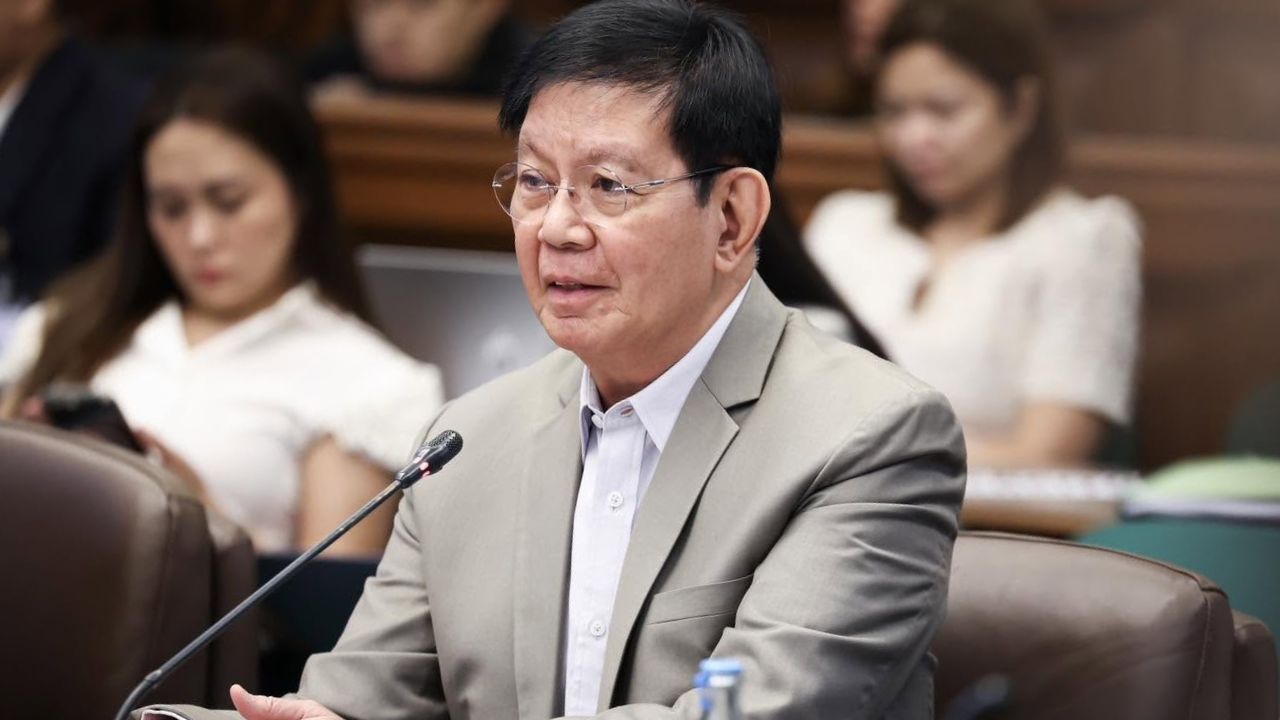

MANILA, Philippines — Senator Panfilo “Ping” Lacson has criticized the 2024 and 2025 national budgets following a Supreme Court ruling that found unconstitutional increases in government appropriations, saying the decision exposes serious problems in how Congress approved public spending.
In a statement on Wednesday, October 21, Lacson said the two General Appropriations Acts (GAAs) would be remembered as among the worst budgets passed by Congress, comparing them with previous government spending controversies involving the Disbursement Acceleration Program (DAP).
The senator welcomed the timing of the ruling, which came as the Senate examines the House-approved version of the proposed ₱7.2-trillion national budget for 2027.
He said the decision serves as a reminder that Congress must observe constitutional limits when reviewing and amending the President's proposed spending program.
In a decision announced Tuesday, October 20, the Supreme Court found that Congress exceeded its constitutional authority when it increased certain appropriations beyond the amounts recommended by the executive branch.
Among the disputed items was a ₱449.5-billion increase in unprogrammed appropriations under the 2024 General Appropriations Act.
The increase raised the allocation from ₱281.9 billion in the National Expenditure Program to approximately ₱731.4 billion in the enacted budget.
The Court also found unconstitutional an additional ₱17.99 billion for the Special Road Fund under the 2025 national budget.
In both instances, the increases violated constitutional restrictions on Congress raising the President's total recommended appropriations.
The Supreme Court also invalidated certain provisions governing the release of unprogrammed funds under the 2026 budget, citing insufficient safeguards and the risk of allowing spending decisions outside established fiscal limits.
Unprogrammed appropriations are standby funds included in the national budget for specific purposes that may be financed when legally prescribed funding conditions are met.
The Supreme Court clarified that such appropriations are not automatically unconstitutional.
However, the Court emphasized that they must remain within the government's fiscal program and be governed by clear restrictions, spending priorities, and accountability measures.
The decision also highlighted the need for transparency in the bicameral conference committee, particularly when lawmakers introduce substantial changes to proposed budget allocations.
Lacson said the decision could guide senators as they scrutinize changes introduced by the House of Representatives to the proposed 2027 spending plan.
He previously warned that the Senate review could result in the restoration of hundreds of billions of pesos in allocations reduced or realigned by the House, including funds intended for foreign-assisted projects.
The senator also clarified that he was not serving in the Senate when Congress approved the 2024 and 2025 budgets.
Regarding the possible consequences of the Supreme Court ruling, Lacson said funds affected by the decision that remain unspent may no longer be released, while expenditures already made may not necessarily be invalidated.
These potential effects remain subject to the ruling's specific terms and implementation.
The decision comes amid renewed scrutiny of congressional budget amendments, particularly infrastructure allocations and the handling of unprogrammed funds.
Former Albay lawmaker Joey Salceda also welcomed the ruling, emphasizing that the decision recognized unprogrammed appropriations as a legitimate fiscal mechanism when subject to constitutional restrictions.
He said the ruling could provide an opportunity to establish a more transparent and accountable national budget system.
With the 2027 spending proposal now under Senate review, the Supreme Court's decision places renewed attention on how lawmakers revise spending priorities and ensure that appropriations comply with constitutional requirements.

MANILA, Philippines — The Philippines is entering the final stages of its preparations for the 49th Association of Southeast Asian Nations (ASEAN) Summit and Related Summits, with government agencies working to finalize security, transportation, and logistical arrangements ahead of the arrival of world leaders in November.
Executive Secretary Ralph Recto, chairperson of the ASEAN National Organizing Council (NOC), said preparations remain on schedule, with nearly all requirements already completed.
During a command conference on Monday, October 19, Recto emphasized the importance of coordination among government agencies as the country prepares to welcome around 20 heads of state and government, along with thousands of delegates and business representatives.
The high-level meetings will take place at the Philippine International Convention Center (PICC) in Pasay City, where regional leaders and dialogue partners are expected to discuss economic cooperation, security challenges, and other issues affecting Southeast Asia.
United States President Donald Trump's participation has also been confirmed by Malacañang, although details of his visit have yet to be announced.
Beyond organizing the international gathering, the government is seeking agreements that could translate into employment, investment, and business opportunities for Filipinos.
Recto said the success of the Philippines' hosting should be measured not only by the smooth conduct of the meetings but also by the benefits that regional cooperation can deliver to ordinary citizens.
Among the major economic priorities is the anticipated substantial conclusion of negotiations for the ASEAN-Canada Free Trade Agreement.
The proposed agreement is intended to strengthen trade and investment relations between Canada and Southeast Asian economies, including the Philippines.
In September, ASEAN and Canadian officials reaffirmed their commitment to advancing negotiations, with both sides targeting substantial progress before the November summit.
Another expected development is the signing of the ASEAN Digital Economy Framework Agreement (DEFA), which aims to establish common rules for digital commerce and cross-border transactions.
The proposed framework covers areas such as cybersecurity, data protection, digital payments, and electronic trade.
It is also expected to help small and medium-sized businesses participate more effectively in the regional digital economy by making cross-border transactions more accessible and secure
With foreign leaders and delegations expected to arrive in Metro Manila, authorities are completing arrangements for airport reception, official convoys, traffic management, venue security, and other operational requirements.
Recto stressed that even minor logistical concerns must be addressed to prevent disruptions during the summit.
The Philippine National Police (PNP) has also been coordinating with concerned agencies and local government units on security deployments and contingency measures around summit venues, hotels, airports, and major transportation hubs.
To help manage traffic and strengthen security, Malacañang has declared November 16 to 18 special non-working days in the National Capital Region under Proclamation No. 1447.
Aside from economic cooperation, the summit is expected to provide a platform for discussions on political and security developments, emerging regional risks, and coordinated responses to challenges affecting ASEAN member states.
Recto said the meetings should help participating countries determine how they can strengthen cooperation and respond collectively to future disruptions.
He also maintained that the government is managing summit preparations with fiscal discipline while pursuing the country's hosting priorities.
Monday's command conference brought together senior officials from agencies responsible for finance, tourism, public works, interior and local government, social welfare, and information and communications technology.
With most preparations completed, the government will continue its final coordination efforts to ensure that the Philippines is ready to receive international leaders and delegates in November.

MANILA, Philippines — Malacañang has defended the appointment of Zofia Canlas as commissioner of the Presidential Commission for the Urban Poor (PCUP), maintaining that her previous experience within the agency and commitment to public service should be considered amid questions about her qualifications.
The appointment has drawn criticism online, particularly over Canlas' academic background and limited professional experience. She graduated from De La Salle University in 2024 with a degree in Biology, major in Medical Biology, just two years before assuming the government post.
During a Palace briefing on Tuesday, October 20, Palace Press Officer Claire Castro explained that Canlas had already worked within the PCUP before being appointed commissioner.
Castro said Canlas previously served as chief of staff to the commission's chairperson, giving her familiarity with the agency's operations and responsibilities.
The Palace maintained that Canlas was not entering an unfamiliar government office, citing her previous involvement in its work as part of the justification for her appointment.
Beyond Canlas' professional background, Castro said President Ferdinand Marcos Jr. places importance on an appointee's ability and willingness to serve the public.
She emphasized that age, economic standing, or personal circumstances should not automatically determine an individual's suitability for government service.
According to Castro, the President's foremost consideration is whether a person has the capability, sincerity, and dedication to fulfill the responsibilities of public office.
The explanation came amid public scrutiny of Canlas' appointment, with critics questioning whether her educational background and relatively short career provide sufficient preparation for a commission responsible for protecting the interests of marginalized urban communities.
The controversy has also prompted questions about the commission's responsibilities, particularly when other government agencies and local government units already handle housing, relocation, and social assistance programs.
Castro explained that the PCUP has a distinct role in representing the concerns of urban poor communities, especially families facing eviction or relocation.
She pointed to the commission's involvement in discussions with affected residents before eviction orders are implemented, helping ensure that relocation arrangements take their circumstances into account.
The PCUP's work includes coordinating with government agencies and communities on issues affecting the welfare and rights of the urban poor.
For the Palace, Canlas' prior experience working within the commission provides a foundation for carrying out those responsibilities.
While Malacañang has defended her appointment, questions surrounding her qualifications remain part of the public discussion over the selection of government officials.

MANILA, Philippines — Senator Risa Hontiveros has called on President Ferdinand Marcos Jr. to declare Chinese Ambassador Jing Quan persona non grata or ask Beijing to recall him, citing a series of confrontations in the West Philippine Sea and the envoy's controversial remarks about China's military strength.
Hontiveros filed Proposed Senate Resolution No. 746 on Tuesday, October 20, arguing that the ambassador's statements should be examined alongside China's actions involving Philippine vessels and personnel in disputed waters.
The measure marks the second Senate resolution seeking diplomatic action against Jing in two days, following a similar proposal filed by Senator Erwin Tulfo on Monday.
Unlike Tulfo's resolution, which asks the Department of Foreign Affairs (DFA) to recommend the declaration, Hontiveros' measure appeals directly to the President to declare Jing unwelcome or formally request his recall by the Chinese government.
In seeking the ambassador's removal, Hontiveros pointed to several reported incidents involving Chinese vessels and Philippine personnel, arguing that Beijing's conduct contradicts its repeated assurances of peaceful intentions.
Her resolution cited the reported assault on a Filipino sailor at Ayungin Shoal, water cannon incidents involving Philippine fishing vessels at Bajo de Masinloc, and the ramming of fisheries vessel BRP Datu Magat Salamat during a fuel delivery mission for Filipino fishermen.
It also referred to a Chinese fighter jet's dangerous approach toward a Philippine patrol aircraft and the reported obstruction of a medical evacuation from the BRP Sierra Madre, which delayed the transfer of an ailing sailor by more than eight hours.
Another incident mentioned in the resolution involved a Chinese fishing vessel that allegedly entered the territorial waters of Lawak Island on October 15 and deployed four smaller boats to conduct fishing activities without Philippine authorization.
Hontiveros linked these incidents to the 2016 South China Sea arbitral ruling, which upheld key Philippine maritime rights and rejected the legal basis for China's expansive historic-rights claims.
The senator maintained that the pattern of reported maritime confrontations raised questions about the sincerity of Beijing's stated commitment to restraint.
The latest controversy began during the October 15 Diliman Dialogues in Quezon City, where Jing responded to Defense Secretary Gilberto Teodoro Jr.'s criticism of China as a regional troublemaker.
During the exchange, Jing suggested that China could easily prevail if it resorted to military force, while insisting that Beijing would choose peace instead.
President Marcos subsequently described the statement as sounding like a threat, while the DFA criticized its implications for bilateral relations.
Foreign Affairs Secretary Ma. Theresa Lazaro summoned the ambassador on October 19 to formally convey the Philippine government's objection to his remarks.
The Chinese Embassy rejected the criticism, maintaining that Jing's statement had been taken out of context.
Hontiveros also raised concerns about the Chinese Embassy's public response to Philippine lawmakers who were considering moves against the ambassador.
On October 17, the embassy challenged lawmakers to proceed with their proposed action rather than merely threaten it, while criticizing politicians and journalists for their interpretation of Jing's remarks.
The senator's resolution also referenced previous diplomatic controversies, including a July video published by Chinese state media that portrayed a monkey wearing a barong and receiving instructions from the United States and Japan.
According to the resolution, the DFA protested the material, but China maintained that it did not represent the government's official position.
Hontiveros cited these incidents as part of her argument that the ambassador's conduct should be evaluated against the broader state of Philippine-China relations.
Despite the growing calls for Jing's removal, the resolution acknowledges the President's constitutional authority over the country's foreign relations.
Under the Vienna Convention on Diplomatic Relations, a receiving state may declare a foreign diplomat persona non grata without having to explain its decision.
However, a Senate resolution does not itself expel an ambassador or compel the executive branch to take diplomatic action.
Malacañang earlier indicated that Marcos was not inclined to declare Jing persona non grata, preferring to address the disagreement through established diplomatic channels.
The Palace has also said it is awaiting the DFA's report on Lazaro's meeting with Jing before announcing any further steps.

MANILA, Philippines — The Department of Foreign Affairs (DFA) will take the lead in addressing the latest diplomatic dispute between Manila and Beijing, with Malacañang awaiting the outcome of discussions involving Chinese Ambassador Jing Quan before determining whether President Ferdinand Marcos Jr. will personally meet with the envoy.
Palace Press Officer Claire Castro said Tuesday, October 20, that no meeting between Marcos and Jing has been scheduled, despite the President's earlier indication that he wanted clarification regarding the ambassador's controversial remarks about China's military capabilities.
Foreign Affairs Secretary Ma. Theresa Lazaro has already met with Jing after the DFA summoned the Chinese diplomat over his statements. However, the Palace has yet to receive a report detailing the discussion or the next steps.
The controversy followed Jing's October 15 interview, during which he suggested that China could easily prevail in a military confrontation but maintained that Beijing would not choose to use force.
His statement drew criticism from Philippine officials, including Marcos, who questioned whether the ambassador's remarks amounted to a threat.
On October 16, the President described Jing's choice of words as inappropriate for a diplomat and expressed interest in understanding what the Chinese envoy intended to convey.
The DFA subsequently summoned Jing to address the remarks, which had heightened tensions between the two countries.
While the diplomatic discussions continue, Malacañang has declined to demand an apology from the Chinese ambassador.
Asked whether Jing should apologize, Castro said expressions of regret must be sincere and cannot be imposed on an individual.
She maintained that the matter should be handled through the DFA, rather than having the Palace preempt the outcome of the discussions.
The administration also reiterated its commitment to maintaining diplomatic relations with China despite the disagreement.
Castro explained that Malacañang would wait for Lazaro's account of her discussion with the ambassador before providing further updates.
Although Marcos previously indicated that the remarks warranted a direct conversation, the Palace has not confirmed whether such a meeting will take place.
The government has also made no announcement regarding additional diplomatic measures arising from the incident.
