


Emergency Hotline:
(+63) 2 911 – 8688


MANILA, Philippines — Another attack on a major airport in Saudi Arabia has resulted in casualties, as the kingdom faces renewed security threats amid escalating hostilities involving Yemen's Houthi rebels.
Saudi Arabia's General Authority of Civil Aviation (GACA) confirmed Thursday, October 22, that one person was killed and eight others were injured when King Fahd International Airport in Dammam, eastern Saudi Arabia, came under attack Wednesday evening, October 21.
The aviation authority identified the fatality as a resident of Saudi Arabia but did not disclose the person's nationality. The eight injured individuals were immediately taken to a hospital for treatment, with their conditions ranging from minor to serious.
The incident also damaged airport property, although authorities have yet to determine the full extent of the destruction.
GACA did not specify how the attack was carried out or identify those responsible.
The airport had previously been targeted on October 11, when Saudi authorities ordered safety inspections and damage assessments following another reported attack.
The latest incident comes amid repeated strikes on Saudi airports and other infrastructure, with Yemen's Iran-backed Houthi movement claiming responsibility for several earlier attacks.
However, responsibility for the October 21 attack on King Fahd International Airport has not been confirmed.
Authorities said they would provide additional information as the assessment of the airport's condition continues.

MANILA, Philippines — The Department of Foreign Affairs (DFA) has issued another warning to the Chinese Embassy in Manila over its recent social media statements, saying its increasingly confrontational language threatens efforts to improve relations between the Philippines and China.
In an official statement released Thursday, October 22, the DFA criticized the embassy's public remarks as inappropriate diplomatic conduct that could further damage trust between the two countries.
The department emphasized that foreign diplomats are expected to demonstrate professionalism and restraint, particularly when communicating through social media.
Despite the latest exchange, the DFA reiterated that the Philippines values its relationship with China and remains committed to constructive diplomatic engagement.
However, it made clear that further diplomatic measures remain an option should circumstances warrant additional action.
The renewed criticism comes amid tensions involving Chinese Ambassador Jing Quan, who drew objections from Philippine officials after suggesting on October 15 that China could easily win a military confrontation if it chose to use force.
Although Jing maintained that Beijing preferred peace, the DFA considered his remarks threatening and summoned him on October 19.
Foreign Affairs Secretary Ma. Theresa Lazaro conveyed the Philippine government's objections during the meeting, emphasizing that foreign representatives should not intimidate or publicly challenge Philippine officials exercising their duties.
The diplomatic dispute also prompted separate Senate resolutions seeking to declare Jing persona non grata or request his recall by Beijing.
The Chinese Embassy subsequently challenged calls for the ambassador's removal, contributing to the escalating public exchange between the two sides.
Alongside its criticism of the embassy's statements, the DFA clarified that the Philippines has not changed its position on the One China Policy.
The department reaffirmed the country's adherence to the 1975 Philippines-China Joint Communiqué, under which Manila recognizes the People's Republic of China as the sole legal government of China.
It also reiterated that the Philippines understands and respects Beijing's position that Taiwan forms part of Chinese territory.
The DFA said existing Philippine regulations continue to reflect the government's implementation of this longstanding policy.
The clarification underscores that the latest diplomatic disagreements have not resulted in a change to the Philippines' official position on China and Taiwan.
While reaffirming the importance of bilateral relations, the DFA maintained that the Chinese Embassy's recent public statements were inconsistent with the constructive engagement traditionally pursued by the two countries and their foreign ministries.
It stressed that diplomatic representatives should avoid language that could aggravate disagreements or undermine efforts to stabilize relations.
The department concluded its October 22 statement by reiterating that it may pursue additional diplomatic action if necessary.

MANILA, Philippines – The safety and welfare of Filipinos living in China must be considered before the Philippine government takes stronger diplomatic action against Chinese Ambassador Jing Quan, Malacañang said Wednesday, October 21.
Palace Press Officer Claire Castro cautioned against making decisions driven by public anger, following mounting calls from lawmakers to declare Jing persona non grata over his controversial remarks about China's military capabilities.
Castro acknowledged the strong public reaction, saying Filipinos have legitimate reasons to defend the country's sovereignty and national interests. However, she stressed that any action against the Chinese envoy should also consider its possible consequences for Philippine nationals residing in China.
The Palace maintained that President Ferdinand Marcos Jr. remains committed to protecting Philippine territory and maritime rights, particularly in the West Philippine Sea, while pursuing diplomatic measures that would not unnecessarily endanger Filipinos abroad.
Castro said the President would not interfere with lawmakers pursuing their respective resolutions but emphasized that the executive branch must carefully consider the implications of any diplomatic decision.
She added that the government would continue discussing measures to strengthen the country's defense capabilities and protect its maritime interests.
Amid the dispute, Castro also urged the public not to lose sight of allegations involving possible Chinese funding linked to Vice President Sara Duterte.
She said the matter deserved further investigation because of its potential national security implications if the allegations were substantiated.
The Palace official raised concerns that the heated exchanges surrounding Jing could divert attention from determining whether foreign funds had reached businesses associated with the Vice President.
The allegations remain unproven and should not be treated as established evidence of foreign interference.
Castro also confirmed that Marcos had made no official announcement regarding a possible meeting with Jing.
The President previously described the ambassador's remarks as threatening, while Malacañang indicated that he was not inclined to expel the Chinese diplomat.
Meanwhile, the Palace said the government would continue evaluating the appropriate diplomatic response while safeguarding Philippine sovereignty and considering the interests of Filipinos who could be affected by further tensions with China.

DPWH removes six more personnel as Davao flood control investigation widens
MANILA, Philippines — The Department of Public Works and Highways (DPWH) has ordered another round of personnel changes involving six officials and engineers as authorities investigate alleged irregularities in flood control projects in Davao City.
Public Works Secretary Vince Dizon issued separate memoranda on Wednesday, October 21, directing the relief of four officials and reassignment of two engineers following criminal complaints filed by the National Bureau of Investigation (NBI).
The latest action follows the removal of three other DPWH officials earlier this week in connection with the same investigation.
Among those relieved were Ferdinand Dallo, officer-in-charge assistant regional director of DPWH Region V, and three officials from the Davao City First District Engineering Office.
The three were identified as Emilio Sucaldito Jr., officer-in-charge district engineer; Kim Anthony Duque, quality assurance section chief; and Kristine Apao, financial management section chief.
Dizon directed the four officials to surrender government records, documents and properties under their custody to ensure that public services would continue without interruption.
Meanwhile, Engineers Aljun Barcoma and Alexander Omadley, both assigned to the Davao City First District Engineering Office, were ordered to report to DPWH Region XI Director Juby Cordon for reassignment.
The orders followed the NBI's filing of complaints before the Department of Justice (DOJ) over suspected irregularities in Davao City's flood control projects.
The complaints involve alleged falsification by public officers under the Revised Penal Code and possible violations of Republic Act No. 3019, or the Anti-Graft and Corrupt Practices Act.
Several private contractors and company representatives were also named as respondents, including individuals associated with Genesis88 Construction Inc. and Agong Builders and Construction Supply Inc.
The allegations remain subject to investigation and the appropriate legal proceedings. The personnel changes do not, by themselves, establish criminal liability.
On October 19, Dizon also ordered the removal of former Davao City district engineer Richard Ragasa, assistant district engineer Lilibeth Sarmiento and construction section chief Roberto Mamaril while the investigation continued.
The DPWH secretary has maintained that officials linked to suspected irregularities would not receive special treatment, emphasizing the department's policy of taking immediate administrative action when warranted.
The NBI investigation and DOJ evaluation of the complaints remain ongoing, with authorities expected to determine whether sufficient evidence exists to pursue criminal charges against the respondents.
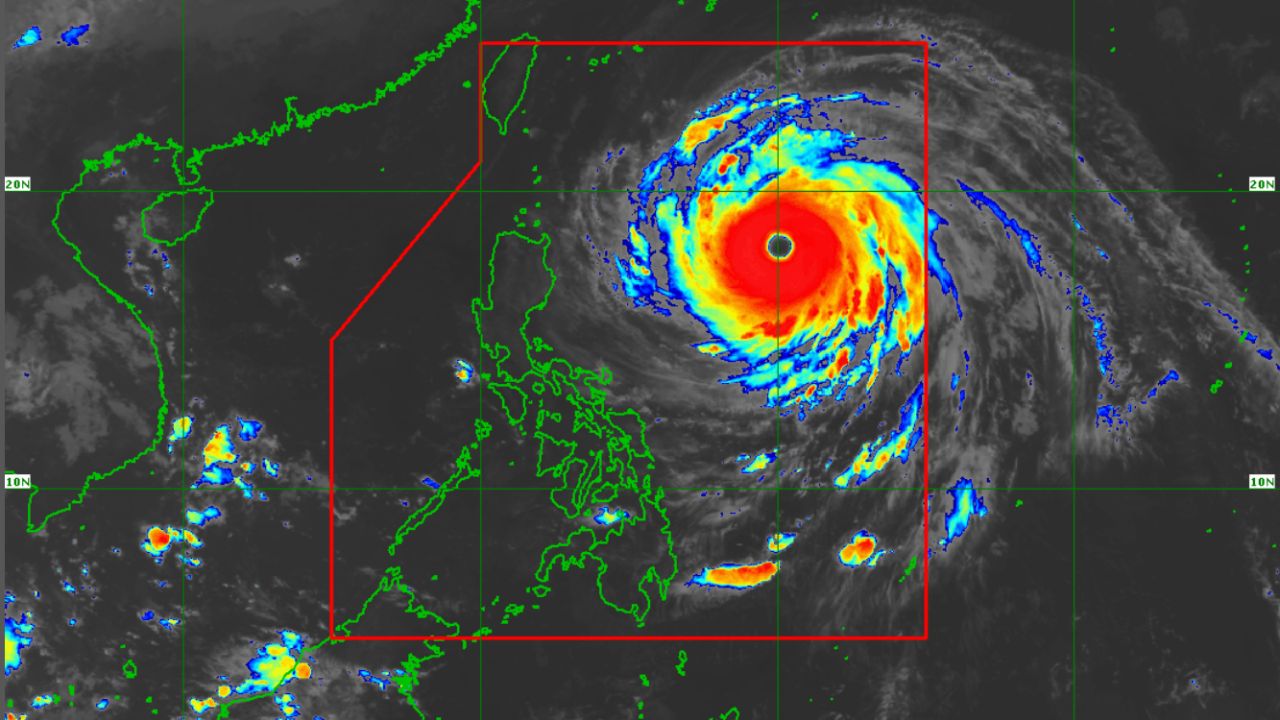
MANILA, Philippines — Super Typhoon Rosal is expected to bring heavy rainfall, strong winds, and dangerous sea conditions to parts of Luzon despite having no projected landfall in the Philippines, according to the Philippine Atmospheric, Geophysical and Astronomical Services Administration (PAGASA).
In its 11 a.m. bulletin on Wednesday, October 21, PAGASA reported that Rosal was located 845 kilometers east of Northern Luzon, packing maximum sustained winds of 215 kilometers per hour (km/h) and gusts of up to 265 km/h.
Batanes was placed under Tropical Cyclone Wind Signal No. 2, while Signal No. 1 was raised over Cagayan, including the Babuyan Islands, Ilocos Norte, Apayao, and portions of Isabela and Catanduanes.
The weather bureau warned that Rosal's circulation and the northeasterly wind flow could bring strong to gale-force gusts across several areas of Luzon and the Visayas. Heavy rainfall may also trigger flash floods and landslides, particularly in vulnerable communities.
Coastal areas face additional risks, with waves potentially reaching nine meters along parts of Batanes and the Babuyan Islands. PAGASA advised mariners to avoid sailing in affected waters due to hazardous sea conditions.
Rosal is forecast to make its closest approach to Extreme Northern Luzon between Thursday, October 22, and Friday afternoon, October 23, before exiting the Philippine Area of Responsibility by Friday evening or early Saturday.
Despite the absence of an expected landfall, PAGASA urged residents to remain vigilant, monitor weather bulletins, and follow evacuation instructions from local authorities when necessary.
