


Emergency Hotline:
(+63) 2 911 – 8688


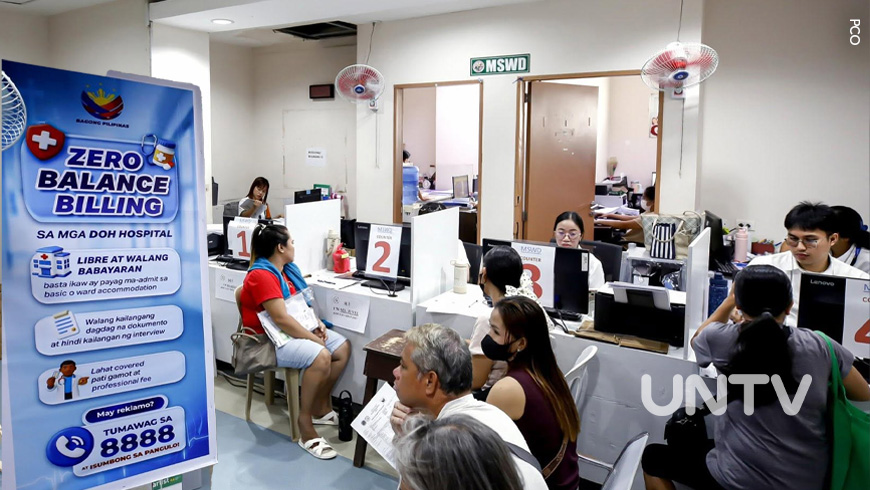

MANILA, Philippines — The Department of Budget and Management has approved the release of ₱10.377 billion to support the implementation of the government’s Zero Balance Billing program in Department of Health hospitals nationwide and six pilot local government hospitals.
The funding is intended to help reduce or eliminate out-of-pocket hospital expenses for eligible patients admitted to participating government health facilities, subject to program guidelines and eligibility requirements.
Acting Budget Secretary Kim Robert de Leon said the allocation is aimed at easing the financial burden of hospitalization on Filipino families.
“No Filipino should have to choose between getting the medical care they need and protecting their family from a hospital bill they cannot afford,” De Leon said.
Of the total funding, ₱9.377 billion will support the implementation of Zero Balance Billing in DOH-run hospitals nationwide.
Around ₱3.342 billion has been earmarked for 12 DOH hospitals in Metro Manila, including East Avenue Medical Center, Jose R. Reyes Memorial Medical Center, San Lazaro Hospital, Rizal Medical Center and the National Children’s Hospital.
Another ₱6.035 billion will fund the program in DOH regional hospitals and other government health facilities outside Metro Manila.
The DBM also released ₱1 billion for Zero Balance Billing in six pilot local government hospitals located in Benguet, Batangas, Laguna, Quezon, Aklan and Sarangani.
The agency said the allocation expands the program beyond DOH-operated facilities and brings financial support closer to patients in provinces and local communities.
The funding is charged against the Department of Health budget under the 2026 General Appropriations Act.
The Zero Balance Billing program forms part of the government’s implementation of Universal Health Care and is designed to ensure that qualified patients in basic accommodation can receive covered hospital services with minimal or no remaining bill.
Separately, the DBM earlier released additional funding for the Philippine General Hospital in August, including ₱800 million specifically for Zero Balance Billing.

Malacañang said government officials should be judged by their actions and service, not by the clothes they wear, amid criticism over Pampanga officials seen wearing designer clothing while responding to communities affected by Habagat flooding.
Palace Press Officer Undersecretary Claire Castro made the statement after Pampanga Governor Lilia Pineda and her son, Vice Governor Dennis “Delta” Pineda, drew criticism online for wearing branded clothing during inspections and disaster response operations in flood-hit areas of the province.
“Ang pagseserbisyo po ay hindi nakikita sa damit, nakikita po ito sa gawa,” Castro said.
She said the more important question is whether government leaders are visible, responsive and actually helping their constituents during times of need.
Castro noted that an official may appear simple or even work under the rain but still fail to provide meaningful assistance.
“Mas maganda po na tingnan ang leader sa trabaho, sa gawa at hindi po sa damit,” she said.
Malacañang, however, stressed that public officials should still be sensitive to the situation and feelings of Filipinos experiencing hardship, trauma and grief following a disaster.
Castro said what may be considered expensive for ordinary Filipinos may already be normal attire for some officials, but she emphasized that leaders should remain mindful of how they present themselves while interacting with disaster-stricken communities.
“Still, siguro kailangan ding maging sensitive, lalong-lalo na kung ang mga kababayan natin ay nakakaranas ng hirap, trauma at kalungkutan,” Castro said.
Republic Act 6713, or the Code of Conduct and Ethical Standards for Public Officials and Employees, also requires government officials to lead modest lives appropriate to their positions and income and prohibits extravagant or ostentatious displays of wealth.
Governor Pineda has since addressed the criticism, saying she and her son do not regularly wear designer clothes and apologizing if their choice of attire during the flood response offended the public.
“Salamat sa wake-up call,” Pineda said in an interview, adding that their priority remained responding to the needs of flood-affected residents.
Pineda maintained that provincial officials continued working around the clock to address the effects of flooding and provide assistance to affected Kapampangans.

MANILA, Philippines — The Department of Education will conduct its National Simultaneous School Safety Drill on Thursday, September 3, with stricter safeguards aimed at protecting students from unnecessary fear, distress and psychological harm.
The exercise will focus on preparing schools for active threat incidents while following child-centered and trauma-informed protocols.
Education Secretary Sonny Angara said the drill was designed to strengthen emergency preparedness without compromising learners’ mental and emotional well-being.
“Safety is not just about physical security; it is equally about protecting our children's peace of mind,” Angara said.
The drill was earlier postponed following consultations with the Philippine Psychiatric Association, Philippine Society for Child and Adolescent Psychiatry, Philippine Pediatric Society and other medical experts.
Ahead of the exercise, participating schools are required to orient teachers and students, assess readiness and notify parents and school personnel in advance.
Schools must also secure written parental consent and learner assent before participation.
Students who need special accommodations or whose parents choose to exempt them must be given alternative safe activities without penalty or stigmatization.
The drill will include basic protective procedures such as securing entry points, practicing silent concealment away from windows and reviewing evacuation routes.
DepEd, however, prohibited hyper-realistic or fear-inducing simulations.
Schools will not be allowed to use active aggressor role-players, firearms, bladed or blunt weapons, pyrotechnics, simulated gunfire or artificial casualties during the exercise.
A separate signal, distinct from fire and earthquake alarms, will also be used to indicate the start of the drill.
“Bawat bata ay may kanya-kanyang antas ng katatagan at pang-unawa, kaya hindi pwedeng one-size-fits-all ang ating approach sa kaligtasan,” Angara said.
Psychological first aid and post-drill debriefings will be provided after the exercise, while learners who need further mental health support may be referred to appropriate health services.
The Philippine National Police will have a limited role during the drill, including external perimeter security, testing emergency response times and post-incident learner tracking.
Police personnel will not be allowed to conduct tactical disarming exercises involving students or use aggressive displays during the activity.
DepEd said the goal is to build preparedness and “calm operational confidence” among students and school personnel without exposing learners to unnecessarily traumatic scenarios.
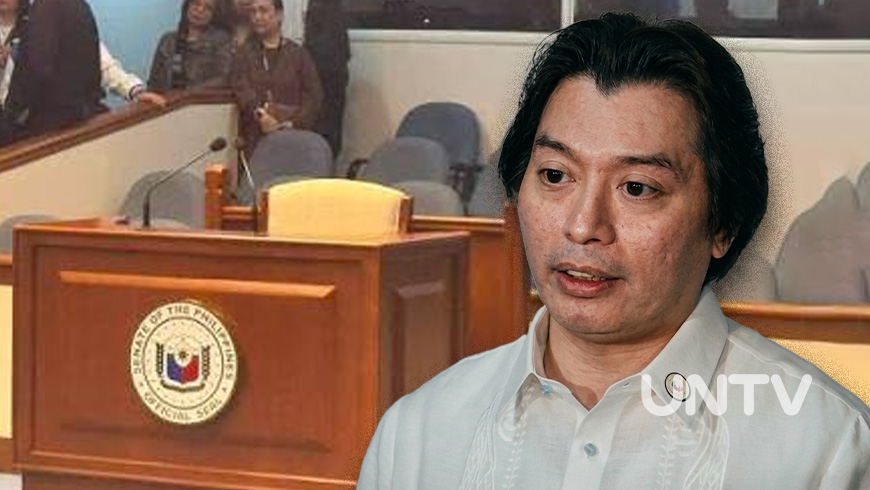
MANILA, Philippines — Atty. Michael Poa has temporarily stepped aside from his roles as counsel and spokesperson for Vice President Sara Duterte’s defense team as he prepares to testify before the Senate impeachment court on Wednesday, September 2.
Poa, a former Department of Education undersecretary and chief of staff during Duterte’s tenure as education secretary, is set to be presented by the House prosecution panel as a witness in connection with the alleged misuse of ₱112.5 million in DepEd confidential funds.
Defense Deputy Spokesperson Atty. Justin Nicol Gular said Poa’s temporary withdrawal from his defense roles was appropriate out of respect for the impeachment court.
“I think for the defense team, it’s just proper that considering that Atty. Michael Poa ay isasalang po sa impeachment court, common etiquette and proper decorum dictates that we respect the impeachment court,” Gular said.
According to Gular, the defense team has also stopped communicating with Poa since it became clear that he would take the witness stand.
He said the measure was intended to avoid any communication that could later raise questions involving Poa’s testimony.
Poa is also no longer staying in the defense team’s holding room at the Senate and is instead using the area designated for witnesses.
Gular stressed, however, that Poa’s absence from his spokesperson role is temporary and that he is expected to return after completing his testimony.
For now, Gular is handling media briefings as deputy spokesperson while the defense team and Vice President Duterte consider whether another spokesperson will be designated.
“I think this is still being considered and talked about between the defense team and, of course, the client, the Vice President,” Gular said.
The House prosecution has identified Poa as a key witness because of his previous positions in DepEd during Duterte’s term as education secretary. Prosecutors are expected to question him about the department’s confidential fund expenditures and related documents.

MANILA, Philippines — Vice President Sara Duterte’s defense team said it saw no need to cross-examine two Armed Forces of the Philippines officers presented by the prosecution during the 20th day of her impeachment trial.
Defense Deputy Spokesperson Atty. Justin Nicol Gular explained that cross-examination is generally used to test a witness’ credibility, but lawyers may choose to skip it when they find no issue with the testimony presented.
The defense did not cross-examine retired Col. Manaros Boransing II and Col. Magtanggol Panopio, who testified before the Senate impeachment court on Tuesday, September 1.
“If we do not see any issue as to the testimony of the witness… lawyers sometimes do not conduct cross-examination anymore,” Gular said.
Gular added that the testimonies were largely based on documents already presented before the impeachment court.
House prosecutor and Manila 3rd District Rep. Joel Chua, meanwhile, said the decision could be part of the defense’s legal strategy. He noted that cross-examining a witness can sometimes further clarify testimony in a way that may not benefit the questioning party.
Boransing and Panopio were presented by the prosecution in connection with certifications issued by Philippine Army units covering Youth Leadership Summits conducted in 2023.
The two officers testified that no confidential funds from the Department of Education or the Office of the Vice President were received or used by their Army units for the youth summits. Boransing said the activities were funded through Army and local government resources.
Panopio also testified that he was not aware when he issued a certification that it would later be submitted by DepEd to the Commission on Audit as part of documents related to its confidential fund expenditures.
The prosecution is seeking to establish that the military certifications did not certify or account for DepEd’s confidential fund spending.
During the proceedings, however, defense lead counsel Atty. Sheila Sison maintained that the certifications were issued “for whatever legal purpose it may serve,” arguing that the officers signed the documents knowing they could later be used for a legal purpose.
The defense also agreed to stipulate that no confidential funds were directly transferred from DepEd to the AFP, but it declined to concede that no confidential or intelligence information was shared between the two agencies.
The defense has maintained that there was no irregularity in DepEd’s use of the AFP certifications in documents submitted in connection with the liquidation of its confidential funds.
