


Emergency Hotline:
(+63) 2 911 – 8688


QUEZON CITY—House Deputy Minority Leader and Mamayang Liberal Partylist Representative Leila De Lima is urging President Ferdinand Marcos Jr. to certify anti-corruption bills as urgent to kick off the new year.
De Lima’s proposed legislative package includes the strengthening of the Independent Commission for Infrastructure (ICI) and the enactment of a "true" anti-political dynasty law. She also emphasized the critical need for laws targeting illicit enrichment and illegal transfers to better protect the national treasury from being squandered.
The lawmaker maintains that these certifications are a necessary "New Year’s resolution" for the executive branch to prove its commitment to genuine systemic reform rather than superficial gestures.
“Bagong taon na, gawin namang New Year’s Resolution ng Pangulo na i-certify as urgent ang mahahalagang batas laban sa katiwalian.” De Lima stresses
[“Now that the New Year has begun, the President should commit to a resolution of certifying critical anti-corruption legislation as urgent."]
De Lima used an analogy for the New Year, stating that if the President avoids these measures, his administration’s stance on corruption would be like a "substandard firework"—promising a big blast but ultimately failing to deliver.
“Pag ganyan nang ganyan na iniiwasan ito ng Pangulo, para s’yang substandard na paputok. Nagpasabog pero supot.” The congresswoman added.
[“With the President constantly dodging the issue, he’s like a cheap firework. He makes a big show of lighting the fuse, but nothing actually happens."]
Meanwhile, Navotas City Representative Toby Tiangco called on the public to remain vigilant regarding the ongoing flood control corruption scandal. Tiangco warned that officials involved might be hoping the 2025 National Budget discussions will distract from the controversy and allow corruption issues to fade from the spotlight.
“Tuwang-tuwa siguro sina Zaldy Co at Rep. Martin Romualdez kasi parang nalilihis na ang isyu at hindi na pinag-uusapan ang korapsyon bunsod ng 2025 national budget.” Representative Tiangco said
[“Zaldy Co and Rep. Martin Romualdez are likely pleased that the focus is being diverted, moving the conversation away from the corruption allegations tied to the 2025 national budget."]
Both lawmakers are pushing for increased transparency to ensure that questionable insertions in the 2025 national budget do not go unaddressed.

QUEZON CITY—House Senior Deputy Minority Leader and Caloocan 2nd District Representative Edgar Erice is set to challenge the constitutionality of the remaining Unprogrammed Appropriations (UA) in the 2026 National Budget before the Supreme Court.
Despite President Ferdinand Marcos Jr. vetoing P92.5 billion of the UA, over P150 billion remains in the budget. Erice argues that these allocations are unconstitutional because they lack a definite source of financing, characterizing the practice as a flawed and legally unstable method of national budgeting.
“I will have to challenge it before the supreme court,” Representative Erice said
The Caloocan representative emphasized the urgency of high court ruling to define whether budgeting for projects without guaranteed funding violates the constitution.
“Mahalaga din na matuldukan na ito at ma-define na talaga ng korte suprema kung talagang ang ganitong uri ng pagba-budget na walang katapat na source of financing ay labag sa ating konstitusyon.” The Caloocan congressman said.
[“It is also important to put an end to this and for the Supreme Court to finally define whether this type of budgeting—which lacks a corresponding source of financing—is truly a violation of our constitution."]
Congressman Erice confirmed that his legal team is finalizing the petition for immediate filing to permanently address the use of unprogrammed appropriations.
Even with the President’s partial veto, the lawmaker insists on a judicial intervention to stop the government from placing vital public services in a financial chaos.

QUEZON CITY—Congress and the Senate of the Philippines have officially ratified the 2026 General Appropriations Bill, incorporating a strict special provision designed to eliminate "epal" politics.
This measure explicitly prohibits politicians from interfering in or controlling the distribution of government financial assistance and other aid programs. The move aims to ensure that public funds reach those in need without being used as tools for political credit or grandstanding.
House Committee on Appropriations Chairperson Mikael Suansing confirmed that the responsibility for drafting and enforcing the specific guidelines now rests with the executive branch.
Once President Ferdinand Marcos Jr. signs the national budget into law, executive agencies will have full authority over the implementation of major social programs. These include the Department of Health’s medical assistance for indigent patients (MAIP), the DSWD’s Assistance to Individuals in Crisis Situation (AICS), and the Labor Department’s TUPAD program.
Regarding the common practice of lawmakers issuing Guarantee Letters (GL) for medical and financial aid, Suansing stated that the executive branch would determine the future of this process. A Guarantee Letter serves as an official government commitment to pay service providers for medicines and medical services rendered to qualified clients.
By delegating these rules to the agencies, the legislature is shifting toward a more technocratic and less political distribution of taxpayer-funded relief.
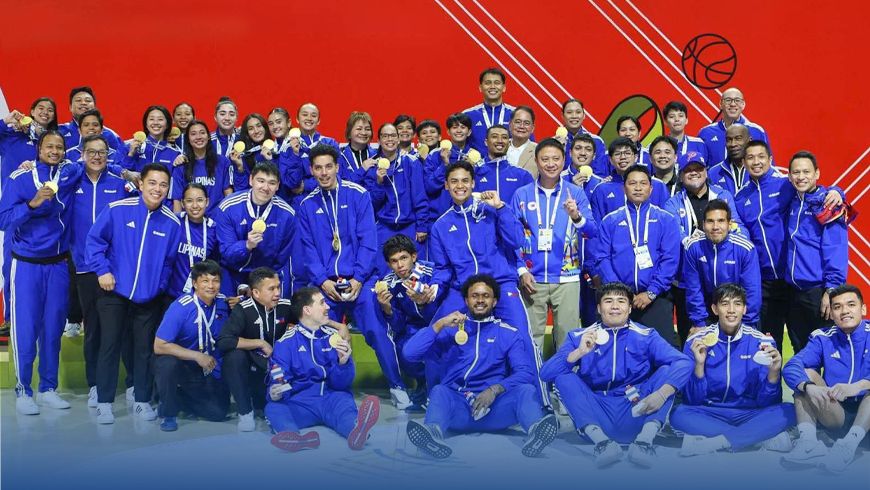
The Philippines has solidified its reputation as a Southeast Asian powerhouse in global sports, finishing with one of the highest "Olympic alignment" rates at the 2025 SEA Games.
While the overall medal tally placed the nation sixth, a deeper analysis reveals that an impressive 70.30% of Team PH’s gold medals were earned in Olympic-relevant sports.
This performance puts the Philippines in a virtual dead heat with Singapore (70.60%) for the top spot, significantly outpacing regional rivals like Indonesia, Thailand, and Vietnam.
This strategic success highlights the country’s growing depth across a diverse range of disciplines. Filipino athletes secured pivotal victories in traditional Olympic mainstays such as athletics, swimming, and gymnastics, while also claiming breakthrough golds in women’s football, baseball, and tennis.
Despite navigating tight restrictions in certain flagship events like boxing, the delegation proved its versatility by delivering podium finishes in weightlifting, rowing, taekwondo, and skateboarding—all sports that are central to the Olympic program.
The data underscores a deliberate shift toward world-class readiness rather than just regional volume. By excelling in events that translate directly to the international stage, the Philippines is effectively building a sustainable pipeline for the 2028 Los Angeles Olympics.
This high percentage of Olympic-aligned gold medals serves as a clear indicator that Filipino athletes are no longer just competing for regional pride but are actively preparing to challenge the world's best on the greatest stage in sports.
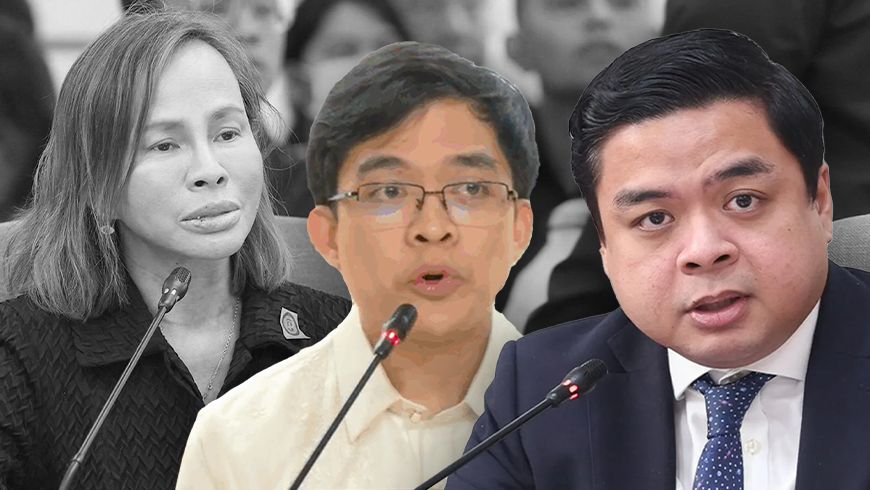
QUEZON CITY—House Committee on Public Accounts Chairperson and Bicol Party-list Representative Terry Ridon warned that Batangas 1st District Representative Leandro Legarda-Leviste could face an ethics complaint following allegations of illegally obtaining the "Cabral Files."
These records, belonging to late Public Works and Highways Secretary Catalina Cabral, were reportedly copied and distributed by Leviste.
Ridon emphasized that Leviste must be held accountable and investigated to determine how he accessed the documents and whether he truly had the authority he claimed to possess.
The controversy intensified after DPWH Secretary Vince Dizon twice issued a flat denial regarding Leviste’s claims of authorization.
"Si Secretary Dizon na po mismo ang nagsabi, twice or thrice, flatly denying giving any authority to Congressman Leviste.” Ridon noted.
["Secretary Dizon himself said it, twice or thrice, flatly denying giving any authority to Congressman Leviste."]
While the contents of the files remain a separate issue to be addressed, the House leadership is currently focused on the potential breach of protocol and misrepresentation of authority by a sitting member according to the Bicol Saro Representative.
“Mahalaga rin po sa Kamara yung pamamaraan kung paano nakuha itong mga files na ito.” Congressman Ridon added.
["The House also places great importance on the method by which these files were obtained."]
For now, the chamber awaits formal action from relevant bodies to determine if a full-scale ethics investigation is warranted based on the evidence of how the sensitive DPWH records were handled.
