


Emergency Hotline:
(+63) 2 911 – 8688




Vice President Sara Duterte continues to dominate presidential surveys, according to the latest Pulse Asia survey, conducted September 17 to 24. She holds a 50% voter preference lead over her potential rivals in the 2028 Presidential Elections.
Other potential candidates based on the survey include:
Numbers may still change, analyst says
However, according to the University of Santo Tomas (UST) Department of Political Science Chairman Dr. Dennis Coronacion, the survey numbers may still change in the future.
“Malaki pa ang posibilidad na magbago yan,” he said
Coronacion emphasized that new issues and information may influence the public’s decision on the officials they want to vote for in the election.
“Ito po ay naimpluwensyahan ng mga bagong issues, mga panibagong impormasyon. So hindi pa ho final yan,” he added
Coronacion also stated that VP Duterte is the only one who openly declared her decision to run for presidential polls. Hence, that declaration may influence why she is being a front-runner in the latest Pulse Asia surveys.
“Maaaring naka-impluwensya ’yon kung bakit siya nagiging frontrunner. Kasi wala pa namang officially nagde-declare, puro pa lang naman usap-usapan pa lang,” he said

Central Nepal has again been hit by a widespread flash flood, a few weeks after the deadly avalanche debris flow in August.

According to the authorities, a dry landslide in Chumnubri Rural Municipality in Gorkha District temporarily blocked the Budhigandaki River. The blockage eventually collapsed due to pressure, unleashing a powerful surge of mud, water, and debris into downstream areas.
Around 45 houses and 3 hydropower projects have been damaged and swept away; several bridges were also destroyed by the strong current.
Meanwhile, five individuals are missing, while more than 80 individuals have been rescued. No deaths have been confirmed so far.
The National Disaster Risk Reduction and Management Authority has issued an evacuation alert for the affected communities. Four helicopters have been deployed for rescue and evacuation operations as the water levels in the Budhigandaki River continue to rise.
Experts have warned about the rising risk of such disasters in the Himalayas due to global warming.

Museums are the most popular and go-to tourist destinations for Filipinos. Aside from the affordability, they serve as great spots for taking photos and videos for digital content. But if we dive deeper, it is not just about that; we must also recognize that museums are the home of the rich culture and history of the Philippines.
Museums are everywhere. They stand as mirrors reflecting the distinct culture and history of a respective location or region.
Did you know that the month of October is celebrated as Museums and Galleries Month?
This observance is mandated by Proclamation No. 798, s. 1991, signed by late President Corazon “Cory” Aquino.
According to the National Commission for Culture and Arts (NCCA), the Museums and Galleries Month aims to arouse national consciousness and pride in our rich culture.
This year, the 2026 observance carries the theme “Exhibits and Reflections: Creating Opportunities for the New World,” highlighting the vital role of museums and galleries in showcasing art that reflects various facets of humanity.
Museums are more than just aesthetic spots for your social media feeds, but they are the home of our nation’s history and culture. This month, go beyond the lens and immerse yourself in the stories that made us who we are today.
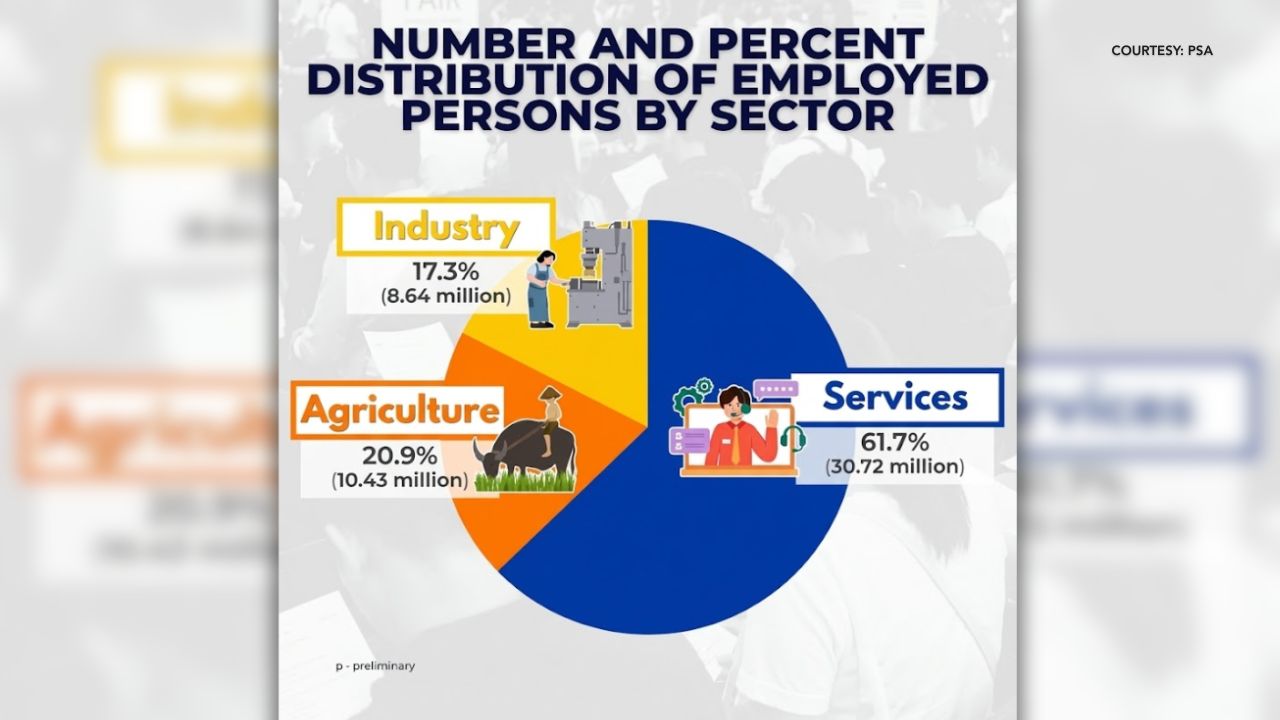
The employment rate in the Philippines in August 2026 dropped to 94.7%, according to the Philippine Statistics Authority (PSA).
Based on the 94.7% data issued by the PSA, the services sector has the highest employment at 61.7%. This was followed by the agricultural sector at 20.9% and the industry sector at 17.3%.
The top three sub-sectors with the highest employment are:
In terns of annual increase, the following sectors recorded the highest employment gains:
Meanwhile, the following sectors logged the highest annual employment drops:
In August 2025, the PSA recorded a 96.1% employment rate, slightly higher than the current 94.7% figure.
The inflation rate as of September rose to 7.2% due to rising food and energy prices, according to the Bangko Sentral ng Pilipinas (BSP).
The BSP explained that rice inflation increased due to concerns about tighter domestic supply and higher transportation costs. Fish and vegetable inflation also rose due to weather disturbances, which affected the supply. Concerns over the spread of swine flu are also included as a contributing factor to the inflation increase.
The BSP reported that core inflation increased to 4.7% in September from 4.1% recorded in August. They also clarified that items with volatile prices, such as food and energy, are excluded from core inflation.
Meanwhile, the Central Bank assures to continue the assessment on the impact of Middle East conflicts and weather distrubances to the inflation and economic growth.
