


Emergency Hotline:
(+63) 2 911 – 8688


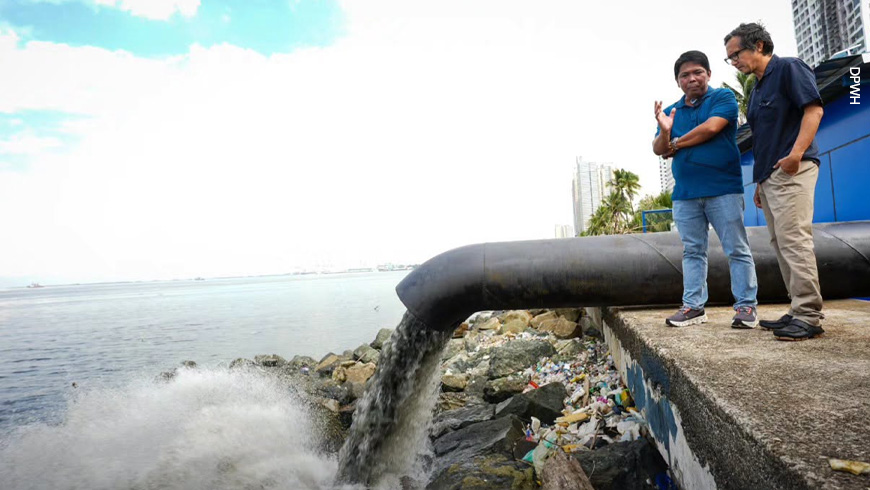

Two newly installed pumps at the Remedios Pumping Station in Malate, Manila are now operational as the government steps up efforts to reduce flooding in low-lying parts of the city.
Public Works Secretary Vince Dizon said during an inspection on September 16 that five pumping stations serving the area — Abad, Remedios, Padre Faura, Harbor and Luneta — are now fully operational.
According to Dizon, the facilities are now directly connected to Manila Electric Co. (Meralco), while generator sets will serve as backup power sources. He said some of the pumping stations previously relied solely on generators because they had not yet been connected to the power grid.
The two new pumps at Remedios are expected to help floodwaters recede faster in affected areas of Malate, including locations extending toward Taft Avenue. DPWH said the operation of the five pumping stations is expected to lessen flooding during the rainy season.
Aside from the pumping facilities, DPWH is constructing a detention basin beneath Rajah Sulayman Park in front of Malate Church.
The basin will be about five meters deep and have a capacity equivalent to at least 1.5 Olympic-size swimming pools. It is designed to temporarily hold excess rainwater and help reduce flooding around Remedios Circle and nearby areas of Malate.
Dizon said construction is expected to take six months, with completion targeted for early 2027.
The projects form part of ongoing flood-mitigation efforts in Manila, where DPWH has also been working on improvements to drainage and pumping infrastructure in flood-prone areas.
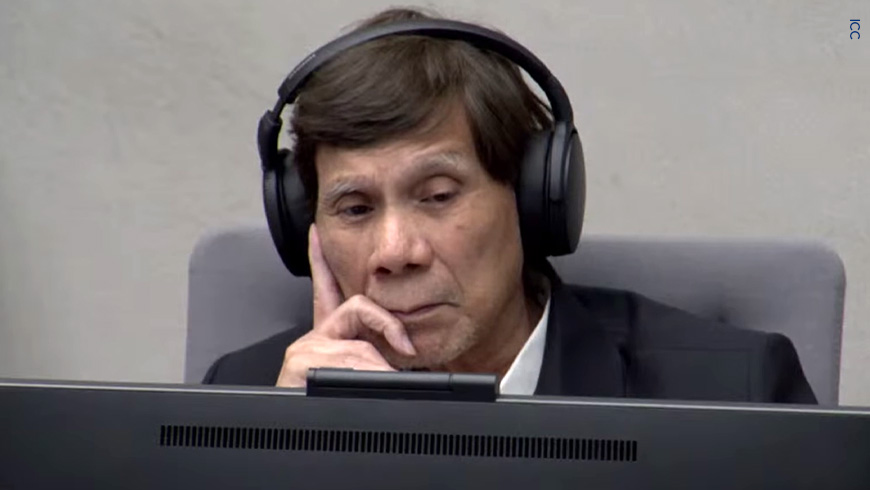
Former President Rodrigo Duterte was seen publicly on Wednesday, September 16, for the first time since his initial appearance before the International Criminal Court in March 2025, as he personally attended a status conference ahead of his trial.
Duterte appeared before ICC Trial Chamber III in The Hague for the third status conference in the crimes against humanity case against him. It was his first time attending a status conference in person after waiving his appearance at the previous two hearings.
His previous public court appearance was on March 14, 2025, two days after he was surrendered to ICC custody. Duterte participated in that initial appearance through video link.
During Wednesday's proceeding, Presiding Judge Joanna Korner noted that it was Duterte's first time inside the courtroom and said he could leave during the proceeding without first seeking the chamber's permission.
Much of the conference focused on preparations for the trial, including the prosecution's witnesses and evidence.
Prosecutors have requested about 193 hours to present their case, while their evidence list contains roughly 15,000 items. Korner urged the prosecution to consider reducing its witnesses and focusing on evidence most essential to its case, stressing the need to keep the proceedings from becoming unnecessarily lengthy.
The chamber did not immediately rule on the prosecution's requested presentation time.
Duterte's trial is scheduled to begin on November 30, 2026. The chamber has indicated that it intends to hold hearings through the period before the Christmas judicial recess, with proceedings continuing in 2027.
Duterte has been in ICC custody since March 12, 2025, following his arrest in the Philippines under an ICC warrant. The case concerns alleged killings connected to the Philippines' campaign against illegal drugs during periods covered by the ICC investigation.

Sugary drinks may not be the only products facing higher taxes under proposals now being discussed by lawmakers and the Department of Finance.
Aside from seeking higher excise taxes on sweetened beverages, the government is also proposing to expand the tax coverage to ice cream, frozen yogurt, sorbetes, ice lollies and other edible ices.
Under the current TRAIN Law, beverages using caloric or non-caloric sweeteners are taxed ₱6 per liter, while those containing high-fructose corn syrup are taxed ₱12 per liter.
Several pending measures seek to raise these rates.
One House proposal would increase the ₱6 tax to ₱9 per liter and the ₱12 tax to ₱18 per liter, while another seeks to raise the rate on sweetened beverages to ₱20 per liter. The DOF, meanwhile, is proposing rates of ₱20 per liter for drinks using caloric or non-caloric sweeteners and ₱40 per liter for those containing high-fructose corn syrup.
Under the DOF proposal, the tax base would also be widened to cover dairy and plant-based ice creams, ice milk, sorbetes, ice lollies, and flavored or unflavored frozen yogurt.
The agency is also considering removing existing exemptions for some products, including 100% natural fruit and vegetable juices with no added sugar.
Supporters of the proposals say higher taxes could help discourage excessive sugar consumption while generating additional funding for government health and nutrition programs.
The proposed higher rates and expanded coverage, however, are not yet in effect and would still require congressional approval.

A Quezon City court has denied Vice President Sara Duterte’s request for the presiding judge to inhibit or voluntarily recuse herself from handling her three-count grave threats case.
In an order dated September 14, Quezon City Regional Trial Court Branch 98 Judge Maria Angelica De Ramos denied Duterte’s motion for inhibition, finding no sufficient basis to step aside from the cases.
Duterte’s legal team filed the motion on September 10, alleging “manifest partiality, bias and favoritism” on the part of the court.
Her lawyers argued that the court had assisted the prosecution in establishing probable cause by allowing the submission of digital evidence that was not included in the prosecution’s original records. They also claimed the defense was not given sufficient opportunity to comment on the additional submission.
De Ramos rejected the allegations, saying there was no clear and convincing evidence of actual bias, prejudgment or any improper connection that would reasonably call her impartiality into question.
Duterte’s lawyer Paul Lawrence Lim said the Vice President would “exercise all available remedies” following the ruling. He also confirmed that the court ordered both parties to observe the sub judice rule and refrain from publicly discussing the merits of the case.
Duterte is facing three counts of grave threats over remarks she made during an online press conference in November 2024 involving President Ferdinand Marcos Jr., First Lady Liza Araneta-Marcos and then-House Speaker Martin Romualdez.
The court issued a warrant of arrest against Duterte on September 4 after finding probable cause to hold her for trial. She posted bail the following day.
Her arraignment, originally scheduled for September 11, was deferred after the filing of the inhibition motion.
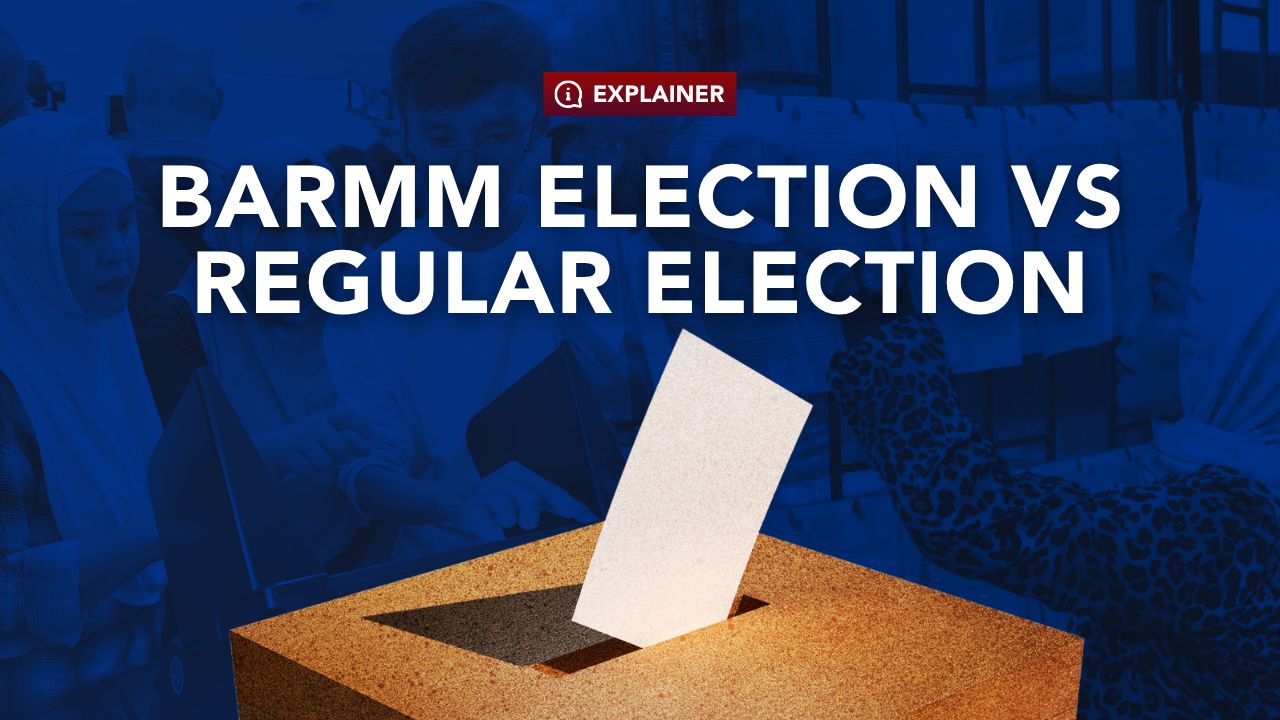
The Bangsamoro Autonomous Region in Muslim Mindanao has just held its first regular parliamentary election, marking a major shift from the transitional government to a Parliament elected by Bangsamoro voters.
The September 14 polls were conducted across BARMM’s 32 parliamentary districts, with more than 2.3 million registered voters expected to participate. But unlike the regular national and local elections most Filipinos are familiar with, the BARMM election follows a different system.
So, what exactly is the difference?
In a regular election, voters directly choose officials such as the president, governor, mayor, vice mayor, and members of Congress or local councils.
In BARMM, voters elect members of the Bangsamoro Parliament, which then forms the regional government.
The Parliament has 80 members, with seats coming from regional political parties, parliamentary districts, and sectoral representation.
One major difference is the party vote. BARMM voters choose a regional political party, and parliamentary seats are allocated according to the parties’ share of the vote.
Voters also elect a representative from their respective parliamentary district, while designated seats are reserved for sectors including women, youth, settler communities, traditional leaders, ulama, and non-Moro Indigenous Peoples.
Another major difference is how the Chief Minister (Punong Ministro ng Bangsamoro) is chosen.
Unlike a president, governor, or mayor, the BARMM Chief Minister is not directly elected by voters. Instead, members of the Bangsamoro Parliament choose the Chief Minister from among themselves.
Simply put, a regular election largely involves voters directly choosing individual officials. The BARMM election combines party, district, and sectoral representation under a parliamentary form of government.
For voters, understanding the difference is important because their choices do more than determine who wins individual seats. The results shape the composition of Parliament—and ultimately who will lead the Bangsamoro regional government.
